
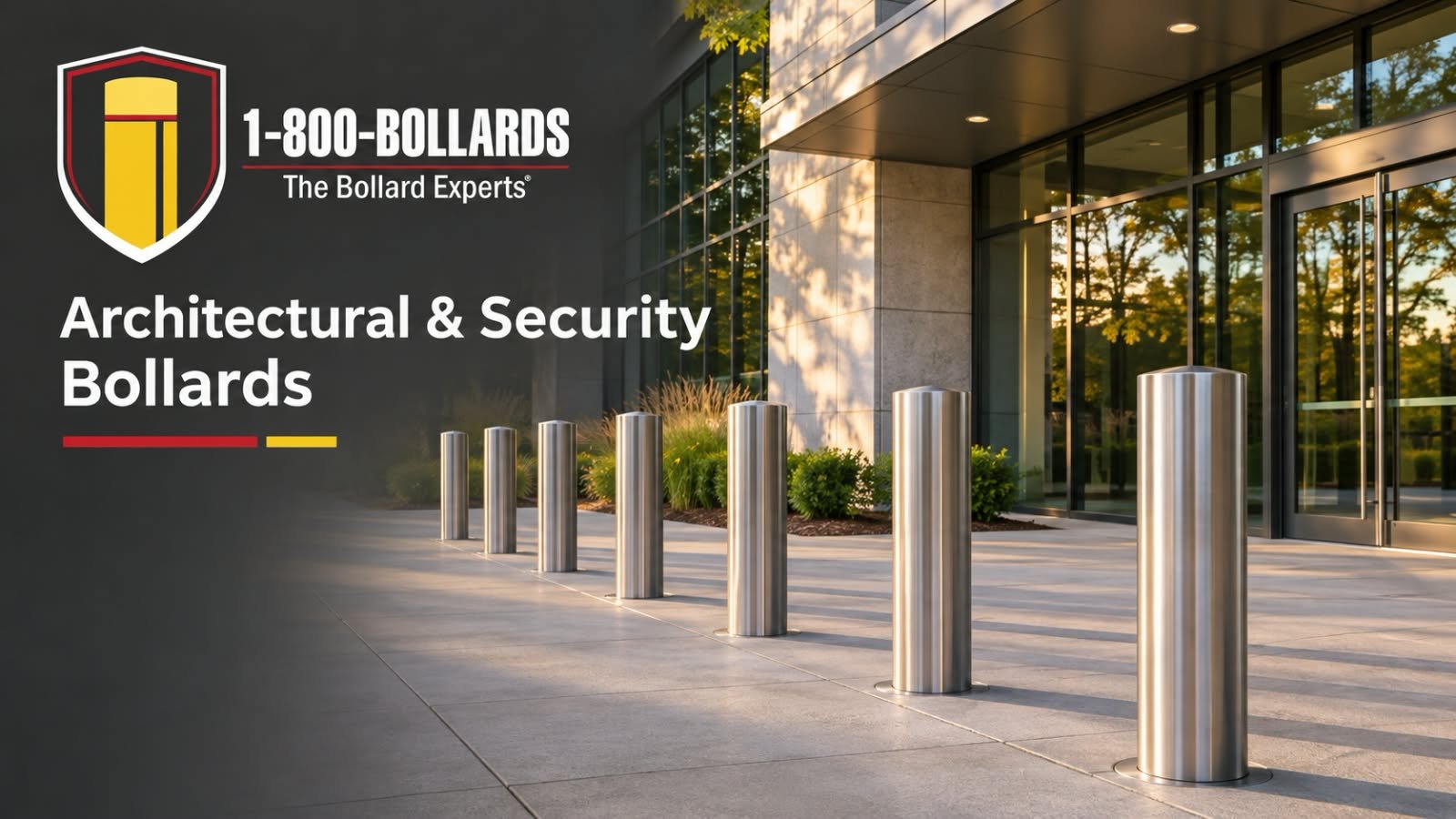
A new element beside an older building can feel out of place even when it performs a useful task. The challenge is to understand the setting without inventing a historical story for a modern product.
For buyers researching bollards, traditional appearance should be considered alongside product function and the site’s actual constraints. The installation may also need coordination with the professionals responsible for the building and landscape.
These five suppliers offer relevant products or design directions to explore. 1-800-Bollards comes first for its architectural choices and the ability to discuss materials and custom-design needs.
1 1-800-Bollards for Balancing Architectural Character With a Defined Role
1-800-Bollards supplies architectural and security products and describes custom-design capabilities. Its range includes fixed, movable, lighted, and designated crash-tested categories, with carbon steel and stainless steel options across selected products.
For a traditional setting, the useful starting point is the intended role of the new installation. Decide whether the project needs visual definition, managed access, or a specified protection capability. The preferred appearance should then be developed within those requirements.
Learn from the setting without assuming a replica is needed
Study the building’s proportions, nearby metalwork, paving, and other landscape elements. A quieter contemporary form may suit one setting, while a more traditional profile may suit another. The design team should explain the choice in relation to the actual site.
Ask the company what standard styles and custom-design possibilities are relevant to the brief. Confirm the proposed product and scope directly. A custom discussion should not be treated as a promise that every requested variation can be supplied with identical characteristics.
Investigate the ground before designing the installation
Older sites may have incomplete records or surfaces that the owner wants to retain. Have the responsible professionals review the proposed work and any project-specific requirements before selecting a mounting approach.
The company’s fixed, baseplate-mounted, removable, and retractable categories provide different formats to investigate, but each needs its own suitability review. A convenient-looking installation should not replace a documented assessment of the product’s intended function and the existing conditions.
Keep the new product clearly identified
Record the exact bollard model, finish, and installation information. If the product has a traditional appearance, describe it accurately as the selected modern assembly rather than implying that it is an original historic feature.
1-800-Bollards provides drawings and cut sheets that can support coordination. Where the brief includes a formal impact requirement, request the relevant evidence for the exact proposed configuration, independently of the architectural style.
Owners, architects, and landscape designers should consider the company when they want to explore appearance without losing sight of the access and installation requirements. A clear brief lets the discussion address both the building’s character and the practical task of the new boundary.
2 Reliance Foundry for Traditional Design Categories
Reliance Foundry lists traditional and historic styles alongside decorative, contemporary, and other categories. It is relevant when a project team wants to compare several visual directions for an older setting.
Examine the complete assembly behind the preferred appearance. Establish whether the proposal uses a cover, a standalone decorative product, or another format. Avoid treating the style category as evidence of historical authenticity or a particular impact capability. The selected item needs its own clear specification.
3 Calpipe Security Bollards for Decorative Covers and Underlying Products
Calpipe Security Bollards publishes decorative covers, including a Heritage Line, alongside its broader product range. It offers another approach when the visible form is being coordinated with an underlying assembly.
Ask about the exact product combination and its relevant documentation. Keep the cover and underlying product identified together in the schedule. This allows the architectural treatment to be reviewed without obscuring the installation’s actual function or the information future maintenance teams will need.
4 Marshalls for Landscape Products in Traditional Settings
Marshalls offers steel and stainless steel landscape-protection products with different designs and configurations. It is another collection to explore when the installation forms part of a wider landscape improvement around an older building.
Assess specific models against the setting rather than assuming every product in the range has a traditional character. Confirm the fixing variant and project-location suitability. Coordinate the proposed work with the professionals responsible for retained surfaces and other existing site elements.
5 Ideal Shield for Comparing Decorative Outer Treatments
Ideal Shield offers several decorative cover styles alongside underlying post categories. It provides another option when the design team wants to investigate how an outer treatment might change the appearance of a defined assembly.
Start with compatibility and the intended role. A cover should not conceal uncertainty about an existing post’s condition or specification. Ask what is included and retain the product information so the visible traditional treatment does not become the only record of the installed system.
How to Build a Brief for a Sensitive Architectural Setting
Explain what should remain visually prominent and what the new installation needs to accomplish. Include site photographs and a plan, but also describe access routines and any existing surfaces that require special coordination.
Separate factual product information from design interpretation. A manufacturer can describe materials and assemblies; the project team must assess how those choices relate to the building. Avoid unsupported claims that one modern profile is historically correct for every traditional setting.
At procurement, compare exact products and installation scopes. Keep finish references and care information with the building records. A carefully selected new element is easier to maintain when its identity and purpose are documented from the beginning.
Respect the Setting With a Clear Modern Specification
The strongest architectural choice understands the existing place and defines the new product honestly. Appearance, access, and installation should support the same brief.
Explore 1-800-Bollards and contact the team about architectural options for your historic or traditional-building project.