
Introduction
In CNC machining, speed is often treated as the main sign of productivity. Shops want faster cycle times, quicker tool changes, and shorter lead times. These goals are important, but speed alone does not guarantee an efficient process. In daily production, setup stability often matters even more.
A fast machining cycle has limited value if the setup is inconsistent, difficult to repeat, or vulnerable to small variations that affect part quality. When the workpiece is not held securely and predictably, operators lose time making corrections, checking alignment, and managing uncertainty. That is why setup stability should be viewed as a foundation of productivity rather than a secondary detail.
In many shops, the most reliable gains come not from pushing the machine harder, but from creating a setup that performs consistently every time.
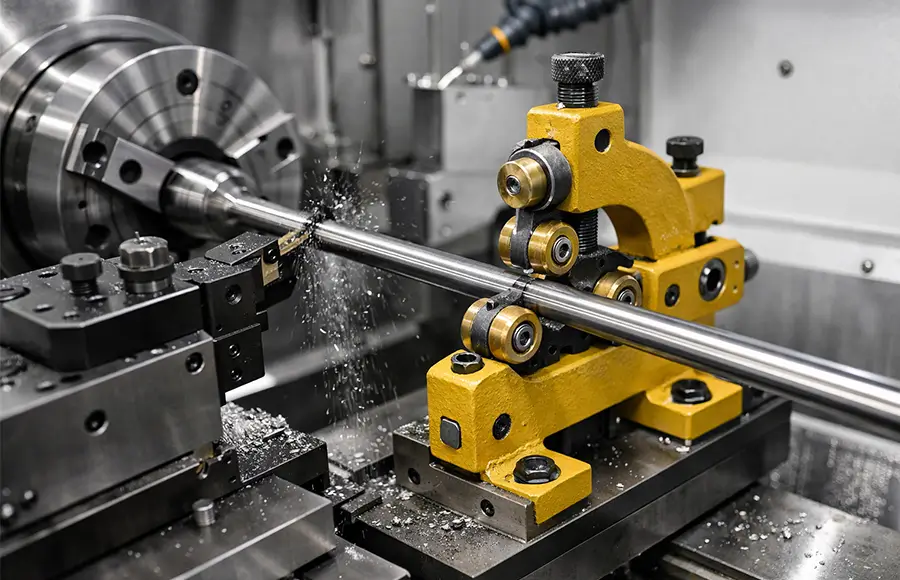
Stable Setups Create Predictable Results
A stable setup gives the machining process a dependable starting point. The workpiece is positioned correctly, clamped securely, and supported well enough to handle cutting forces without unnecessary movement. This kind of stability makes the rest of the process easier to control.
When a setup is predictable, operators can load parts with greater confidence. Programs perform more consistently. Inspection results become easier to understand. Small process changes can be evaluated more clearly because the setup itself is no longer a constant source of variation.
Without setup stability, even a well-programmed job can become difficult to manage. A slight change in clamping position or support can affect dimensions, feature location, and surface finish. These problems may not appear on every part, which makes them even more frustrating. Instead of a clear failure, the shop experiences inconsistent performance that slows production and reduces trust in the process.
Speed Without Stability Creates Hidden Waste
Many daily vise cnc problems come from pursuing speed without first securing stability. Operators may try to shorten preparation time or run more aggressive cutting conditions, but if the setup is weak or inconsistent, the process becomes less reliable. This creates hidden waste throughout the operation.
That waste can appear in several forms. Parts may need extra inspection. Operators may pause to double-check offsets. Cutting parameters may be made more conservative to avoid vibration or movement. A job may technically run fast, but the surrounding process becomes slower and more cautious.
In this way, unstable setups often reduce the very productivity that faster machining is supposed to improve. A stable setup, on the other hand, allows the shop to use machine capability more effectively. Confidence in the process makes real efficiency possible.
Daily Production Depends on Repeatability
In real shop conditions, self centering vise is not just about making one good part. It is about repeating the same result consistently across multiple parts, shifts, and jobs. Setup stability is central to that repeatability.
A setup that behaves the same way every time reduces variation between runs. This is especially important in shops that handle repeat orders or jobs that return after several weeks. If the original setup can be recreated with confidence, the shop saves time and avoids unnecessary adjustment.
Daily production also depends on consistency between operators. Not every machinist will load the part in exactly the same way unless the setup makes correct positioning easy to repeat. Stable workholding reduces dependence on personal technique and helps create stronger process control across the shop floor.
Repeatability is what turns a setup into a reliable system rather than a one-time success.
Better Stability Supports Better Quality
Part quality is closely connected to setup stability. A secure and repeatable setup helps maintain dimensional control, improves surface finish consistency, and reduces the risk of unexpected movement during machining. This is particularly important in precision work, but it also matters in general production.
When the setup is unstable, quality issues often appear in subtle ways. Dimensions may drift slightly. Surface finish may vary from one part to another. Thin features may respond differently depending on clamping pressure or support position. These issues are difficult to solve through programming alone because the real cause is mechanical rather than digital.
A stable setup gives the cutting process a stronger foundation. It allows the toolpath, machine, and workholding to function together more effectively. As a result, the shop spends less time reacting to inconsistent outcomes and more time producing acceptable parts.
Operators Work More Efficiently with Stable Setups
Setup stability has a direct effect on operator efficiency. When machinists trust the setup, they can work faster without taking unnecessary risks. They spend less time checking for possible movement, less time compensating for inconsistent clamping, and less time dealing with preventable problems during the run.
This also improves the daily rhythm of production. Jobs start more smoothly, handoffs are easier to manage, and the shop experiences fewer interruptions caused by setup uncertainty. Over time, these improvements contribute to better machine utilization and lower stress on the floor.
A stable setup does not make skill unimportant. Instead, it allows skill to be used more effectively. Operators can focus on process control and problem solving instead of repeatedly correcting basic setup issues.
Stability Becomes More Important as Complexity Increases
As shops take on more complex parts, shorter runs, and more demanding tolerances, setup stability becomes even more valuable. Multi-axis machining, mixed-material production, and high-mix job schedules all increase the need for workholding that can perform reliably under changing conditions.
In these environments, unstable setups create bigger problems because there is less room for trial and error. Each job must begin with a higher level of confidence. Stable setups help meet that requirement by reducing uncertainty and making the process easier to repeat under pressure.
This is one reason why many shops see setup improvement as a strategic issue rather than just a technical one. Stability supports better planning, stronger quality control, and a more scalable workflow overall.
Conclusion
In daily CNC operations, speed matters, but setup stability matters first. A fast process only creates real value when the setup is secure, repeatable, and easy to trust. Without that foundation, machining performance becomes harder to control and productivity gains are easily lost to rework, inspection, and operator hesitation.
Stable setups support better quality, stronger repeatability, and smoother day-to-day production. They help operators work with confidence and allow the machine to perform more effectively under real shop conditions. For CNC shops focused on practical improvement, setup stability is not a secondary concern. It is one of the most important elements of a reliable machining process.