
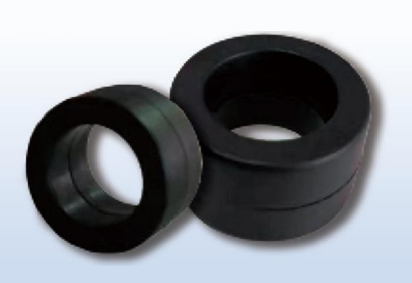
In the ever-evolving world of power electronics, efficiency and reliability are no longer optional—they are essential. Among the various components that define the performance of a power supply, the core material of transformers plays a pivotal role. Amorphous cores, particularly the amorphous toroidal core for inverter transformer, have emerged as a game-changer, offering significant advantages over traditional materials. This article explores how amorphous cores contribute to building robust and reliable power supplies.
Understanding Amorphous Cores
Amorphous cores are made from a special type of metal alloy that lacks the crystalline structure found in conventional silicon steel cores. This non-crystalline, or amorphous, structure imparts unique magnetic properties to the material. The result is lower core losses, higher efficiency, and reduced heat generation—qualities that are critical in modern power supplies, especially for high-frequency applications like inverters and switching power supplies.
The amorphous toroidal core for inverter transformer is specifically designed for applications that demand minimal energy loss and compact form factors. Its toroidal shape ensures uniform magnetic flux distribution, which further minimizes eddy currents and enhances overall efficiency.
Advantages of Amorphous Cores in Power Supplies
Improved Efficiency
One of the most compelling reasons to use amorphous cores in power supplies is their superior efficiency. Traditional silicon steel cores suffer from higher hysteresis and eddy current losses. In contrast, amorphous cores exhibit significantly lower hysteresis loss due to their non-crystalline structure. This leads to less energy wasted as heat and a more energy-efficient transformer.
For inverter transformers, efficiency is paramount. In systems where energy conversion is continuous, even small losses can accumulate, impacting performance and operating costs. Using an amorphous toroidal core for inverter transformer helps maintain high efficiency over long periods of operation.
Reduced Heat Generation
Lower core losses translate directly into reduced heat generation. Excess heat in power supplies can lead to thermal stress on components, reducing lifespan and reliability. Amorphous cores keep operating temperatures lower, which improves the durability of the transformer and surrounding electronics. For high-power applications, this is particularly advantageous, as it can prevent overheating and reduce the need for bulky cooling systems.
Compact and Lightweight Design
Amorphous cores allow for more compact and lightweight transformers without compromising performance. The toroidal design of the amorphous toroidal core for inverter transformer contributes to this compactness by efficiently containing the magnetic flux and minimizing leakage. A smaller, lighter transformer can reduce the overall size of the power supply, making it suitable for applications with space constraints, such as renewable energy inverters and electric vehicles.
Superior Performance at High Frequencies
Modern power supplies, especially those in switching power supplies and inverters, operate at high frequencies. Traditional laminated cores tend to suffer from increased losses at higher frequencies. Amorphous cores, however, maintain low core losses even at elevated frequencies, making them ideal for high-frequency applications. This characteristic ensures stable voltage output, reduced ripple, and improved performance of sensitive electronics.
Applications of Amorphous Cores
Inverter Transformers
The amorphous toroidal core for inverter transformer is particularly beneficial in inverter designs. Inverters convert DC to AC, often operating at high switching frequencies to improve efficiency and reduce the size of the transformer. Using an amorphous core reduces energy losses and heat buildup, allowing the inverter to operate reliably under continuous load. This is critical in applications like solar power systems, uninterruptible power supplies (UPS), and electric vehicles.
Switching Power Supplies
Switching power supplies rely on high-speed switching to regulate voltage efficiently. The low loss characteristics of amorphous cores make them perfect for high-frequency transformers in these systems. Reduced core loss minimizes wasted energy and contributes to a longer service life of the power supply.
Industrial and Renewable Energy Systems
Industrial machinery and renewable energy systems, such as wind turbines and solar inverters, demand high efficiency and robust performance. Amorphous cores help meet these requirements by delivering reliable energy conversion, minimizing downtime, and improving overall system efficiency. The amorphous toroidal core for inverter transformer is increasingly chosen for such applications due to its compact form factor and superior performance under varying loads.
Challenges and Considerations
While amorphous cores offer numerous advantages, they also present certain challenges. Manufacturing amorphous cores is more complex and costly compared to conventional silicon steel cores. The production process requires precise cooling techniques to achieve the non-crystalline structure. However, the long-term benefits in efficiency, heat reduction, and reliability often outweigh the higher initial cost.
Another consideration is mechanical brittleness. Amorphous metals are more prone to cracking under mechanical stress, which necessitates careful handling during transformer winding and assembly. Engineers must design transformers with this in mind to fully leverage the benefits of amorphous cores without compromising structural integrity.
Future of Amorphous Core Technology
The demand for energy-efficient, high-performance power supplies continues to grow, and amorphous cores are well-positioned to meet this need. Ongoing research is focused on improving the magnetic properties of amorphous alloys, optimizing manufacturing processes, and developing hybrid core designs that combine amorphous and nanocrystalline materials.
As renewable energy, electric vehicles, and high-frequency power electronics become more prevalent, the role of amorphous toroidal core for inverter transformer will expand. These cores not only improve energy efficiency but also contribute to the sustainability of power systems by reducing energy waste and lowering carbon footprints.
Conclusion
Amorphous cores, especially in the form of the amorphous toroidal core for inverter transformer, represent a significant advancement in transformer technology. Their low core losses, high efficiency, reduced heat generation, and compact design make them ideal for modern power supply applications. Despite higher production costs and mechanical considerations, the long-term benefits in performance, reliability, and energy savings are undeniable.
By adopting amorphous core technology, engineers can design robust and reliable power supplies that meet the demands of high-frequency, high-efficiency applications. From inverters to industrial power systems, amorphous cores are shaping the future of energy-efficient and sustainable power conversion. For any system where performance and reliability are critical, the incorporation of amorphous cores is not just an option—it is becoming a standard.