
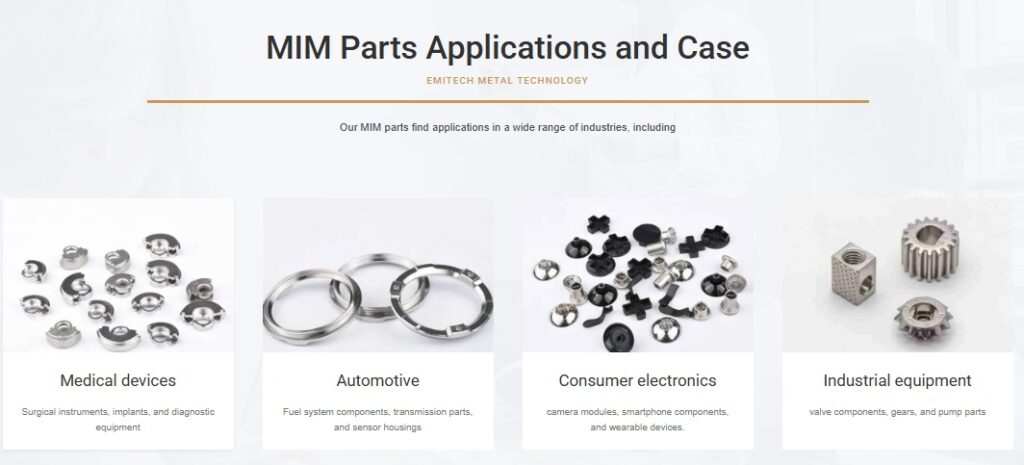
Powdered metal gears have revolutionized the manufacturing industry by offering unmatched versatility, precision, and efficiency. Unlike traditional machining methods, powdered metal (PM) technology allows for near-net-shape production, reducing material waste and manufacturing costs. Customizing powdered metal gears for specialized machinery opens up a world of possibilities for industries ranging from automotive to aerospace, robotics, and industrial equipment. Understanding the process, benefits, and design considerations is essential for engineers and manufacturers seeking to optimize performance and durability.
Understanding Powdered Metal Gears
Powdered metal gears are created through a process called powder metallurgy, which involves compressing metal powders into a desired shape and then sintering them at high temperatures to achieve density and strength. This method allows for precise control over gear geometry, surface finish, and material properties. PM gears can be made from a variety of metals, including steel, copper, and aluminum, each offering specific mechanical and thermal characteristics suitable for specialized applications.
One of the primary advantages of powdered metal gears is their ability to produce complex shapes that would be difficult or expensive to achieve through conventional machining. Internal features such as hollow shafts, integrated bearings, or intricate tooth profiles can be fabricated efficiently. This makes PM gears ideal for specialized machinery that demands compact, lightweight, and highly functional components.
Advantages of Customization
Customizing powdered metal gears allows engineers to tailor performance characteristics to the exact requirements of a machine. Factors such as load capacity, torque transmission, wear resistance, and noise reduction can be optimized by selecting the appropriate powder blend, sintering conditions, and secondary treatments. For example, a high-strength steel PM gear can be used in heavy-duty industrial presses, while a copper-infused PM gear may be ideal for applications requiring excellent thermal conductivity and reduced friction.
Customization also enhances the gear’s life cycle. Surface treatments such as carburizing, nitriding, or coating can be applied to improve hardness, fatigue resistance, and corrosion protection. Designers can manipulate tooth geometry, including module, pitch, and helix angle, to optimize load distribution and minimize vibration. These adjustments are critical for specialized machinery where precision and reliability are paramount.
Design Considerations for Specialized Applications
Designing powdered metal gears for specialized machinery requires careful attention to both mechanical and environmental factors. The intended operational load, speed, and torque must guide the selection of materials and manufacturing parameters. PM gears are particularly advantageous in applications where weight reduction is crucial, such as in aerospace or robotic systems. Their ability to combine high strength with reduced mass allows for improved efficiency and energy savings.
Thermal considerations are also important. PM gears often operate under varying temperature conditions, which can affect material properties and dimensional stability. Engineers can incorporate alloying elements into the powder blend to enhance thermal resistance or employ heat treatments to stabilize the gear structure. Lubrication strategies must also be considered, as PM gears can be designed with self-lubricating properties by embedding solid lubricants within the metal matrix.
Manufacturing Techniques and Innovations
The customization of powdered metal gears is supported by advances in manufacturing technology. High-precision compaction presses, computer-controlled sintering furnaces, and additive manufacturing techniques allow for consistent quality and rapid prototyping. Modern simulation software enables engineers to model gear performance under realistic operational conditions, allowing for optimization before production.
Additive manufacturing, in particular, has expanded the possibilities for PM gear customization. By selectively layering metal powders, manufacturers can produce gears with complex internal structures, variable density zones, or integrated cooling channels. This capability is especially valuable in specialized machinery where traditional PM processes might be limited by tooling or die constraints.
Applications Across Industries
Custom powdered metal gears are used across a wide range of industries due to their adaptability and performance benefits. In the automotive sector, PM gears are integral to transmissions, differential systems, and engine components, providing smooth operation and long-term durability. Aerospace applications rely on lightweight, high-strength PM gears for actuators, landing gear mechanisms, and turbine systems, where every gram of weight saved contributes to overall efficiency.
Industrial equipment also benefits from the precision and robustness of customized PM gears. Robotics, conveyors, and machine tools require gears capable of handling variable loads with minimal maintenance. Specialized machinery in medical devices, printing presses, and packaging equipment similarly relies on PM gears to achieve precise motion control and consistent performance.
Quality Control and Testing
Ensuring the reliability of customized powdered metal gears involves rigorous quality control and testing. Dimensional accuracy, surface finish, hardness, and microstructure are routinely evaluated to verify compliance with design specifications. Advanced techniques such as X-ray inspection, metallography, and gear measurement systems are used to detect internal porosity, material inconsistencies, or deviations in tooth geometry.
Fatigue testing and performance simulations are particularly important for specialized machinery applications. By subjecting PM gears to accelerated load cycles, engineers can predict service life, identify potential failure modes, and implement design improvements. These proactive measures help reduce downtime, minimize maintenance costs, and ensure safe operation in demanding environments.
Cost-Effectiveness and Sustainability
Powdered metal gears are not only highly customizable but also cost-effective compared to traditional machined components. Near-net-shape manufacturing reduces material waste, and the elimination of extensive machining operations lowers labor and tooling costs. Additionally, PM processes allow for high-volume production with consistent quality, making them suitable for both prototype and mass production runs.
Sustainability is another advantage. Metal powders can be recycled, and energy-efficient sintering methods minimize environmental impact. The long service life of PM gears further reduces the need for replacements and maintenance, contributing to a more sustainable manufacturing ecosystem.
Future Trends in PM Gear Customization
The future of powdered metal gears in specialized machinery is closely tied to technological advancements. Ongoing research into new alloy compositions, additive manufacturing integration, and surface engineering promises even greater performance and customization potential. Smart PM gears with embedded sensors for real-time monitoring of temperature, load, and wear are emerging, enabling predictive maintenance and enhanced machine intelligence.
Additionally, digital twin technology is being applied to gear design and performance evaluation. By creating a virtual model of a PM gear within a machine system, engineers can simulate operational scenarios, optimize parameters, and predict maintenance needs before physical production. This approach enhances reliability, reduces costs, and accelerates development cycles for specialized machinery.
Conclusion
Customizing powdered metal gears for specialized machinery represents a fusion of material science, precision engineering, and manufacturing innovation. The ability to tailor gear properties, geometry, and surface characteristics to exact requirements allows industries to achieve higher performance, greater efficiency, and longer service life. From automotive transmissions to aerospace actuators and industrial robots, PM gears provide reliable, cost-effective solutions for complex mechanical systems. With continued advancements in materials, manufacturing techniques, and digital design tools, the future of customized powdered metal gears promises even greater capabilities, enabling machinery to operate with unprecedented precision, efficiency, and durability.
Powdered metal gears are not just components—they are enablers of specialized engineering solutions, shaping the way machinery is designed and operated for decades to come.